Moz Q&A is closed.
After more than 13 years, and tens of thousands of questions, Moz Q&A closed on 12th December 2024. Whilst we’re not completely removing the content - many posts will still be possible to view - we have locked both new posts and new replies. More details here.
302 redirects in Magento, trying to fix
-
Hi all, I'm assigned a site in Magento. After the first craw, we found almost 15k 302 redirects.
A sample URL ends with this /stores/store/switch/?SID=qdq9mf1u6afgodo1vtvk0ucdpb&___from_store=default&___store=german&uenc=aHR0cHM6Ly9qdWljeWZsdXRlcy5jb20vP19fX3N0b3JlPWdlcm1hbg%2C%2C
And they are currently 302 redirecting to the homepage as well as other main pages and also product pages it seems.
Some of these point to account pages where customers log in. Probably best for me to de-index those so no issues there.
But I'm worried about the 302 redirects to public pages.
The extension we have installed is SEO Suite Ultimate by MageWorx.
Does anyone here have experience here specifically and how did you fix it?
Thanks,
JC
-
It turned out to be a language extension. We took it out and fixed everything except for a couple of links. I'm opening a new question for those. Thanks for all your help!
-
Look at the template, as this is the likely culprit making links to these 302 redirects. If they are not required, simply remove any references to the link on your template?
If they are necessary links as you say, customer login etc - add a nofollow tag and de-index the page.
Ensure you have self-referencing canonical tags on the pages with lots of parameters.
You could also remove the a tag to something less SEO friendly to reduce your potential crawl budget ensuring that your non-vital (product/category) pages exhume more importance.
If you have so many links/pages, they will get lost within all the nonsense.
-
@lasclients Hello, you should debug the redirections in this case. Here's what you can do in Magento 2:
If you face an unexpected 301 or 302 redirect in Magento 2 and you don't know why it happens or what code causes it, you can easily find this out by temporarily editing the following files:
/vendor/magento/framework/HTTP/PhpEnvironment/Response.php /var/www/html/m2_35ee/vendor/magento/framework/Controller/Result/Redirect.phpOpen Response.php and add the following line to the beginning of the setRedirect function:
var_dump($url); \Magento\Framework\Debug::backtrace(false, true, false); exit();Example:
public function setRedirect($url, $code = 302) { var_dump($url); \Magento\Framework\Debug::backtrace(false, true, false); exit(); $this->setHeader('Location', $url, true) ->setHttpResponseCode($code); return $this; }Now you open the second Redirect.php file and add this:
var_dump($this->url); \Magento\Framework\Debug::backtrace(false, true, false); exit();After each line containing:
$this->url =Example:
public function setRefererUrl() { $this->url = $this->redirect->getRefererUrl(); var_dump($this->url); \Magento\Framework\Debug::backtrace(false, true, false); exit(); return $this; } public function setRefererOrBaseUrl() { $this->url = $this->redirect->getRedirectUrl(); var_dump($this->url); \Magento\Framework\Debug::backtrace(false, true, false); exit(); return $this; } public function setUrl($url) { $this->url = $url; var_dump($this->url); \Magento\Framework\Debug::backtrace(false, true, false); exit(); return $this; } public function setPath($path, array $params = []) { $this->url = $this->urlBuilder->getUrl($path, $this->redirect->updatePathParams($params)); var_dump($this->url); \Magento\Framework\Debug::backtrace(false, true, false); exit(); return $this; }Save the corresponding changes and open a page that causes an unexpected redirect. You should see a debug backtrace with the information about the code line causing the redirect.
If you don't see it, it means that the redirect is not caused by Magento code, but the webserver settings, or the third-party module code that uses not-recommended Magento programming practices.
Hope this helps!

Got a burning SEO question?
Subscribe to Moz Pro to gain full access to Q&A, answer questions, and ask your own.
Browse Questions
Explore more categories
-
Moz Tools
Chat with the community about the Moz tools.
-
SEO Tactics
Discuss the SEO process with fellow marketers
-
Community
Discuss industry events, jobs, and news!
-
Digital Marketing
Chat about tactics outside of SEO
-
Research & Trends
Dive into research and trends in the search industry.
-
Support
Connect on product support and feature requests.
Related Questions
-
Unsolved Temporary redirect from 302 to 301 for PNG File?
#302HTTP #temporaryredirect
Technical SEO | | Damian_Ed 0
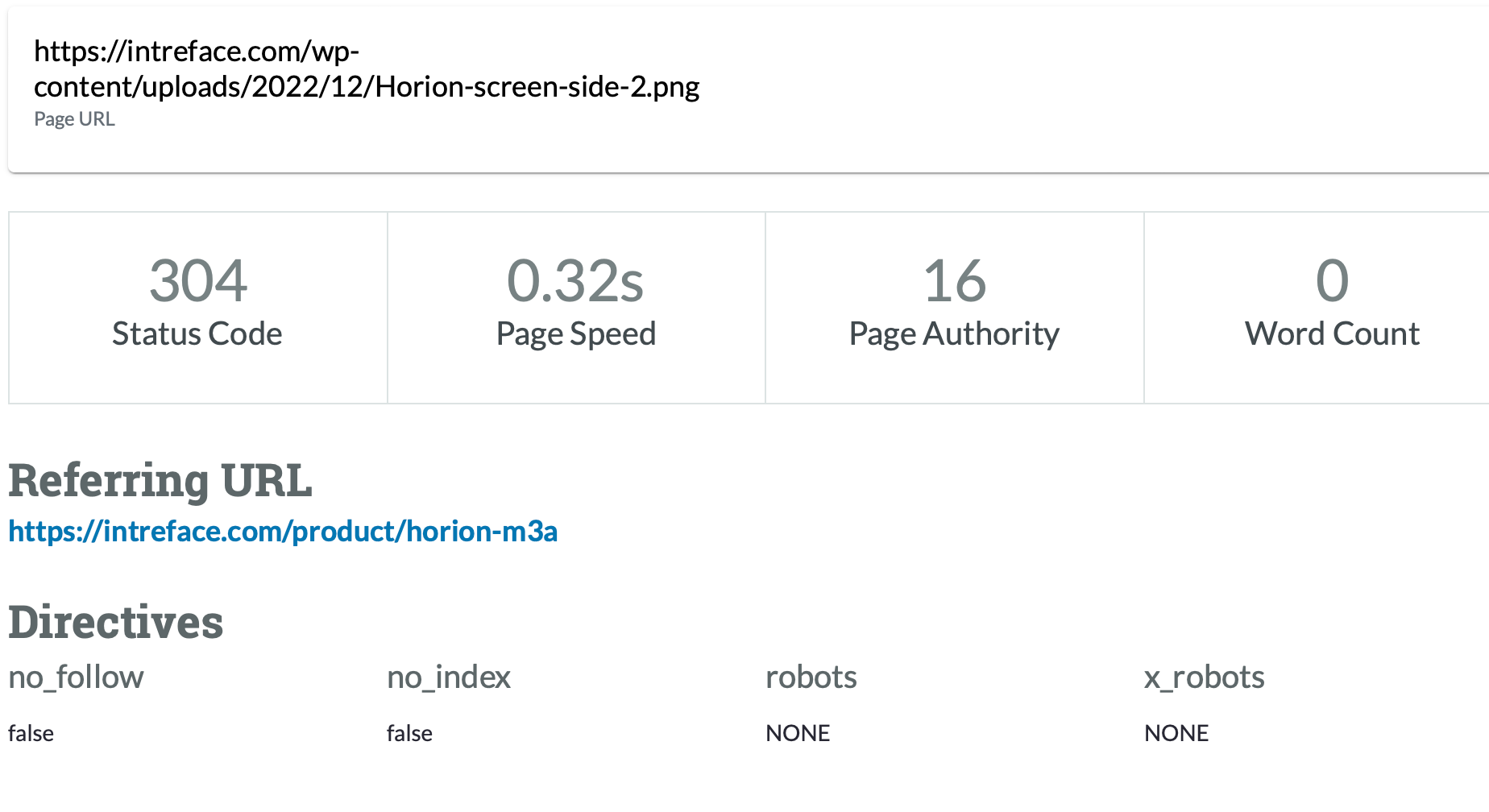
Hi everyone, Recently I have faced a crawl issue with my media images on website. For example this page url https://intreface.com/wp-content/uploads/2022/12/Horion-screen-side-2.png has 302 HTTP Status and the recommendation is to change it 301. I have read the article on temporary redirections here:
https://moz.com/learn/seo/redirection?_ga=2.45324708.1293586627.1702571936-916254120.1702571936
but its not written here how to redirect in my HTML 1 image url not the landing page.
Screenshot 2023-12-15 at 11.02.40.png
I have messaged to MOZ Support but they recommended to go for the MOZ Community!
Screenshot 2023-12-15 at 11.06.02.png Could you assist me wit this issue please? I can reach HTTML of the necessary page and change what I need for permanent redirection but firstly I need to understand how to do that correctly.0 -
Our clients Magento 2 site has lots of obsolete categories. Advice on SEO best practice for setting server level redirects so I can delete them?
Our client's Magento website has been running for at least a decade, so has a lot of old legacy categories for Brands they no longer carry. We're looking to trim down the amount of unnecessary URL Redirects in Magento, so my question is: Is there a way that is SEO efficient to setup permanent redirects at a server level (nginx) that Google will crawl to allow us at some point to delete the categories and Magento URL Redirects? If this is a good practice can you at some point then delete the server redirects as google has marked them as permanent?
Technical SEO | | Breemcc0 -
I have a question about the impact of a root domain redirect on site-wide redirects and slugs.
I have a question about the impact (if any) of site-wide redirects for DNS/hosting change purposes. I am preparing to redirect the domain for a site I manage from https://siteImanage.com to https://www.siteImanage.com. Traffic to the site currently redirects in reverse, from https://www.siteImanage.com to https://siteImanage.com. Based on my research, I understand that making this change should not affect the site’s excellent SEO as long as my canonical tags are updated and a 301 redirect is in place. But I wanted to make sure there wasn’t a potential consequence of this switch I’m not considering. Because this redirect lives at the root of all the site’s slugs and existing redirects, will it technically produce a redirect chain or a redirect loop? If it does, is that problematic? Thanks for your input!
Technical SEO | | mollykathariner_ms0 -
WPEngine Causing Redirect Chain
Hi guys, Had a quick question that I wanted to verify here. After reviewing a Moz report we received some redirect chain error on all of our sites hosted with WPEngine. We noticed that the redirect chain appears to be coming from how the domains are configured in their control panel. Essentially, there is a redirect: from staging/temp -> to live from non-www -> to www SSL redirect from http -> https The issue here is that the non-www is redirecting to www and then redirected again to https://www According to support the only way to get rid of this error is to drop the www version of the domain and to host everything under https://domain.com. To me it seems very odd that you cannot just go from http://non-www to https://www in just 1 301 redirect. Has anyone else experienced this or am I just not looking at the situation correctly?
Technical SEO | | AaronHenry0 -
302 redirect used, submit old sitemap?
The website of a partner of mine was recently migrated to a new platform. Even though the content on the pages mostly stayed the same, both the HTML source (divs, meta data, headers, etc.) and URLs (removed index.php, removed capitalization, etc) changed heavily. Unfortunately, the URLs of ALL forum posts (150K+) were redirected using a 302 redirect, which was only recently discovered and swiftly changed to a 301 after the discovery. Several other important content pages (150+) weren't redirected at all at first, but most now have a 301 redirect as well. The 302 redirects and 404 content pages had been live for over 2 weeks at that point, and judging by the consistent day/day drop in organic traffic, I'm guessing Google didn't like the way this migration went. My best guess would be that Google is currently treating all these content pages as 'new' (after all, the source code changed 50%+, most of the meta data changed, the URL changed, and a 302 redirect was used). On top of that, the large number of 404's they've encountered (40K+) probably also fueled their belief of a now non-worthy-of-traffic website. Given that some of these pages had been online for almost a decade, I would love Google to see that these pages are actually new versions of the old page, and therefore pass on any link juice & authority. I had the idea of submitting a sitemap containing the most important URLs of the old website (as harvested from the Top Visited Pages from Google Analytics, because no old sitemap was ever generated...), thereby re-pointing Google to all these old pages, but presenting them with a nice 301 redirect this time instead, hopefully causing them to regain their rankings. To your best knowledge, would that help the problems I've outlined above? Could it hurt? Any other tips are welcome as well.
Technical SEO | | Theo-NL0 -
Http to https - is a '302 object moved' redirect losing me link juice?
Hi guys, I'm looking at a new site that's completely under https - when I look at the http variant it redirects to the https site with "302 object moved" within the code. I got this by loading the http and https variants into webmaster tools as separate sites, and then doing a 'fetch as google' across both. There is some traffic coming through the http option, and as people start linking to the new site I'm worried they'll link to the http variant, and the 302 redirect to the https site losing me ranking juice from that link. Is this a correct scenario, and if so, should I prioritise moving the 302 to a 301? Cheers, Jez
Technical SEO | | jez0000 -
Do search engines treat 307 redirects differently from 302 redirects?
We will need to send our users to an alternate version of our homepage for a few hours for a certain event. The SEO task at hand is to minimize the chance of the special homepage getting crawled and cached in the search engines in place of our normal homepage. (This has happened in the past so the concern is not imaginary.) Among other options, 302 and 307 redirects are being discussed. IE, redirecting www.domain.com to www.domain.com/specialpage. Having used 302s and 301s in the past, I am well aware of how search engines treat them. A 302 effectively says "Hey, Google! Please get rid of the old content on www.domain.com and replace it with the content on /specialpage!" Which is exactly what we don't want. My question is: do the search engines handle 307s any differently? I am hearing that the 307 does NOT result in the content of the second page being cached with the first URL. But I don't see that in the definition below (from w3.org). Then again, why differentiate it from the 302? 307 Temporary Redirect The requested resource resides temporarily under a different URI. Since the redirection MAY be altered on occasion, the client SHOULD continue to use the Request-URI for future requests. This response is only cacheable if indicated by a Cache-Control or Expires header field. The temporary URI SHOULD be given by the Location field in the response. Unless the request method was HEAD, the entity of the response SHOULD contain a short hypertext note with a hyperlink to the new URI(s) , since many pre-HTTP/1.1 user agents do not understand the 307 status. Therefore, the note SHOULD contain the information necessary for a user to repeat the original request on the new URI. If the 307 status code is received in response to a request other than GET or HEAD, the user agent MUST NOT automatically redirect the request unless it can be confirmed by the user, since this might change the conditions under which the request was issued.
Technical SEO | | CarsProduction0 -
Double 301 redirect
Hi together, due to some technical reasons I have redirect (301) an existing link two times. Example: www.mydomain.com/root/site.html > 301 > www.mydomain.com/site.html > 301 www.mydomain.com/site_new.html Is there anybody how has got some experience like doing a double redirect? What about link juice? Best regards Steffen
Technical SEO | | steffen_0