Moz Q&A is closed.
After more than 13 years, and tens of thousands of questions, Moz Q&A closed on 12th December 2024. Whilst we’re not completely removing the content - many posts will still be possible to view - we have locked both new posts and new replies. More details here.
Solved How to solve orphan pages on a job board
-
Working on a website that has a job board, and over 4000 active job ads. All of these ads are listed on a single "job board" page, and don’t obviously all load at the same time.
They are not linked to from anywhere else, so all tools are listing all of these job ad pages as orphans.
How much of a red flag are these orphan pages? Do sites like Indeed have this same issue? Their job ads are completely dynamic, how are these pages then indexed?
We use Google’s Search API to handle any expired jobs, so they are not the issue. It’s the active, but orphaned pages we are looking to solve. The site is hosted on WordPress.
What is the best way to solve this issue? Just create a job category page and link to each individual job ad from there? Any simpler and perhaps more obvious solutions? What does the website structure need to be like for the problem to be solved? Would appreciate any advice you can share!
-
@cyrus-shepard-0 Thanks so much for your input! The categorization option was what we were thinking about as well, but not sure if the client will be ready to invest the time. Will definitely suggest it to them.
Not majorly concerned about the jobs being found via Google search as individual posts, it's more about avoiding the orphans, as I'm sure they will be seen as a red flag.
Also, yes, the job posts are covered in a sitemap, you are correct.
-
@michael_m Seems like you have a number of options.
Can you categorize the jobs into more specific types (e.g. region, job type, etc.) and then add them to more category-specific "job board" pages? Even if you had duplication across job boards, seems like you'd get better crawl + indexation coverage. Anything to create a more clear crawling path to those pages. Even 20-50 job categories (or other sort/filter features) might provide benefit, and those category pages probably have a better chance of ranking on their own.
Cross-linking from similar/related jobs might also be a good option to explore. Much how we link to related questions here in the Q&A.
Orphaned pages aren't always a problem, as long as the pages are getting indexed and ranked. I imagine the search volume is pretty low for some of those jobs, but Google's sitemap indexation report is going to be your friend here.
Hope that helps!
Are the job postings covered in a sitemap? As SEO tools are finding them as orphaned, I assume they are discovering the pages via sitemaps.
Got a burning SEO question?
Subscribe to Moz Pro to gain full access to Q&A, answer questions, and ask your own.
Browse Questions
Explore more categories
-
Moz Tools
Chat with the community about the Moz tools.
-
SEO Tactics
Discuss the SEO process with fellow marketers
-
Community
Discuss industry events, jobs, and news!
-
Digital Marketing
Chat about tactics outside of SEO
-
Research & Trends
Dive into research and trends in the search industry.
-
Support
Connect on product support and feature requests.
Related Questions
-
Best redirect destination for 18k highly-linked pages
Technical SEO question regarding redirects; I appreciate any insights on best way to handle. Situation: We're decommissioning several major content sections on a website, comprising ~18k webpages. This is a well established site (10+ years) and many of the pages within these sections have high-quality inbound links from .orgs and .edus. Challenge: We're trying to determine the best place to redirect these 18k pages. For user experience, we believe best option is the homepage, which has a statement about the changes to the site and links to the most important remaining sections of the site. It's also the most important page on site, so the bolster of 301 redirected links doesn't seem bad. However, someone on our team is concerned that that many new redirected pages and links going to our homepage will trigger a negative SEO flag for the homepage, and recommends instead that they all go to our custom 404 page (which also includes links to important remaining sections). What's the right approach here to preserve remaining SEO value of these soon-to-be-redirected pages without triggering Google penalties?
Technical SEO | | davidvogel1 -
How to Boost Your WordPress Website Speed to 95+ (Without Premium Plugins)
I'm reaching out for some advice on improving my WordPress website's speed. I'm currently using a free theme for this fusion magazine and aiming for a score of 95+ on Google PageSpeed Insights. I'm aware that premium plugins can significantly enhance performance, but I'm hoping to achieve similar results using primarily free solutions and manual optimizations.
Technical SEO | | mohammadrehanseo0 -
How to index e-commerce marketplace product pages
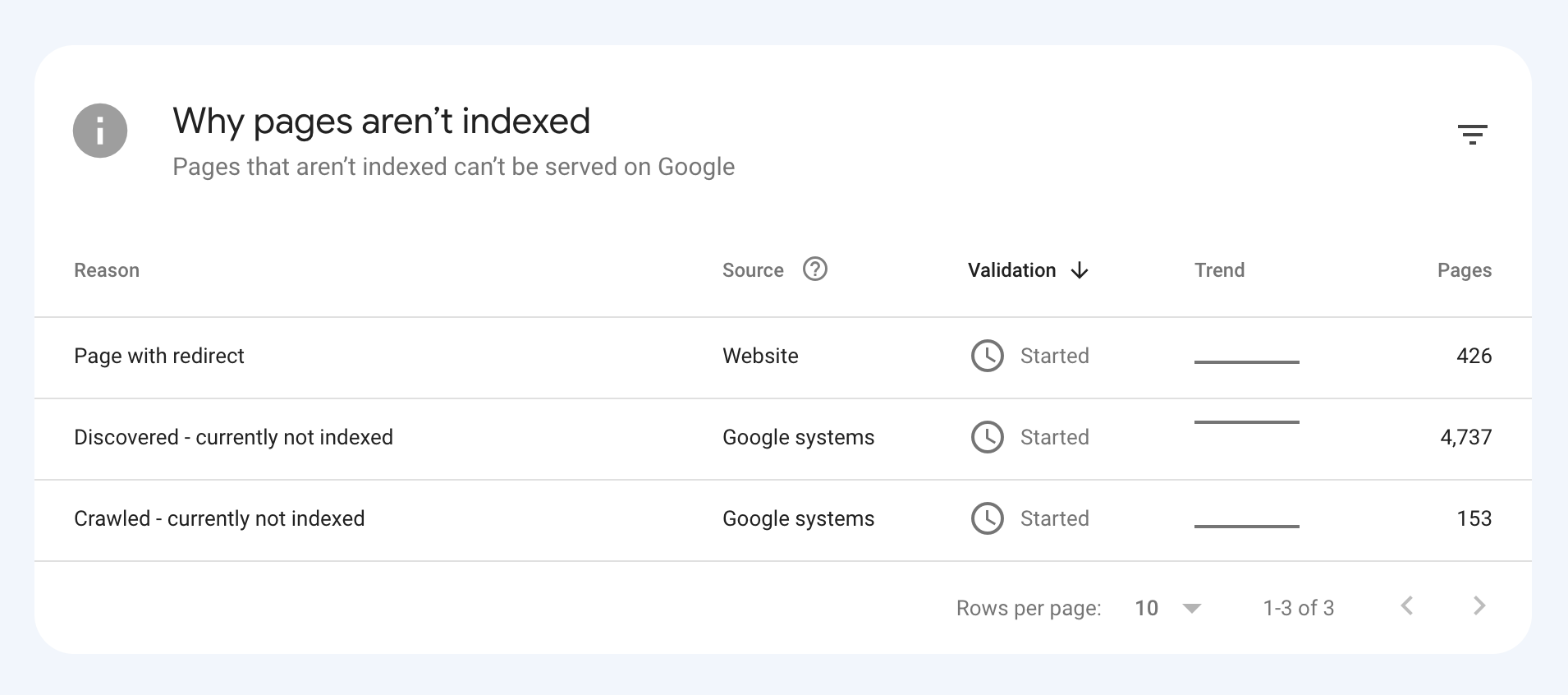
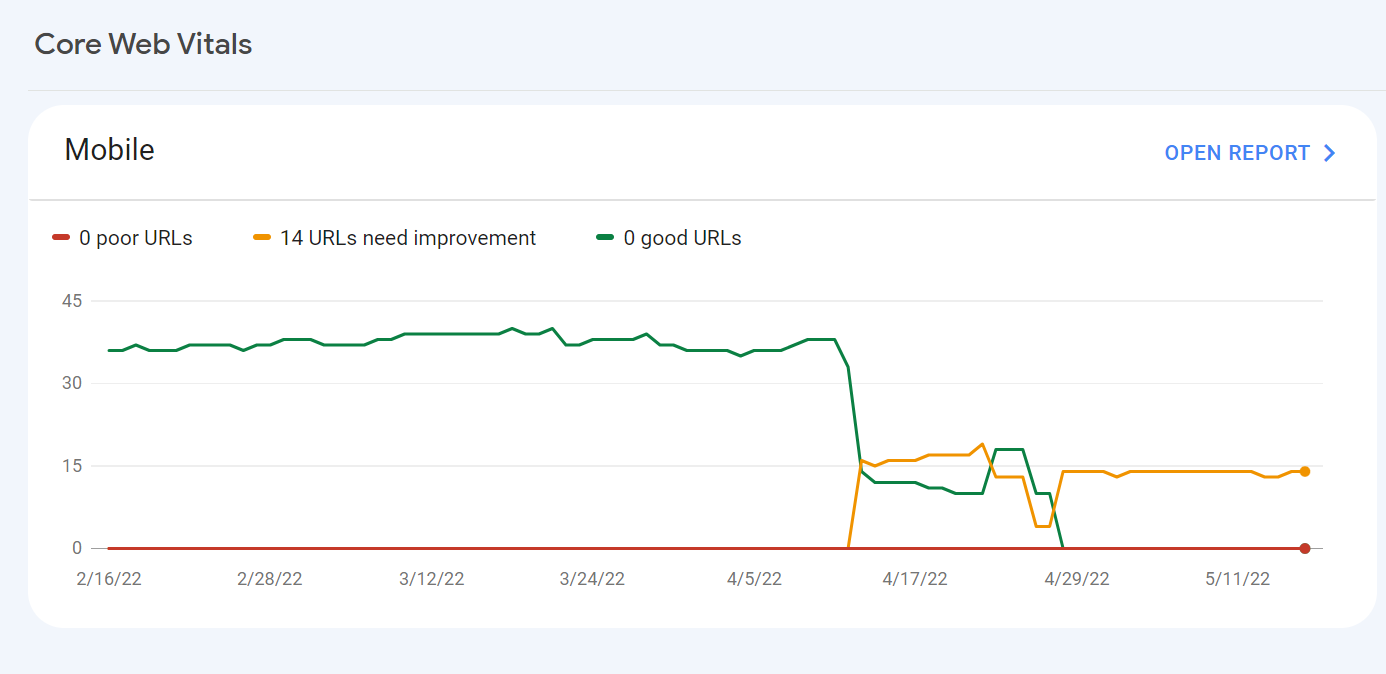
Hello! We are an online marketplace that submitted our sitemap through Google Search Console 2 weeks ago. Although the sitemap has been submitted successfully, out of ~10000 links (we have ~10000 product pages), we only have 25 that have been indexed. I've attached images of the reasons given for not indexing the platform. gsc-dashboard-1 gsc-dashboard-2 How would we go about fixing this?
Technical SEO | | fbcosta0 -
Page Speed or Site Speed which one does Google considered a ranking signal
I've read many threads online which proves that website speed is a ranking factor. There's a friend whose website scores 44 (slow metric score) on Google Pagespeed Insights. Despite that his website is slow, he outranks me on Google search results. It confuses me that I optimized my website for speed, but my competitor's slow site outperforms me. On Six9ja.com, I did amazing work by getting my target score which is 100 (fast metric score) on Google Pagespeed Insights. Coming to my Google search console tool, they have shown that some of my pages have average scores, while some have slow scores. Google search console tool proves me wrong that none of my pages are fast. Then where did the fast metrics went? Could it be because I added three Adsense Javascript code to all my blog posts? If so, that means that Adsense code is slowing website speed performance despite having an async tag. I tested my blog post speed and I understand that my page speed reduced by 48 due to the 3 Adsense javascript codes added to it. I got 62 (Average metric score). Now, my site speed is=100, then my page speed=62 Does this mean that Google considers page speed rather than site speed as a ranking factor? Screenshots: https://imgur.com/a/YSxSwOG **Regarding: **https://six9ja.com/
Reporting & Analytics | | Kingsmart1 -
Google Analytics Goal/Event/SOMETHING to show only Wordpress "Posts", not pages, etc
Hi all, Our site is build on Wordpress and formerly the post URL's had the typical date format at the beginning. This made it easy for me to look at, for example, all search traffic to the blog. I would just view URL's containing /2014/ and /2015/ and boom. We have since removed the dates from the URL's with proper redirects etc, which is great, but now I can't figure out a way to look at ONLY the blog in GA. I like to track a KPI of 'search visits to blog posts' and I can't figure out how to now. Can I set up a GA event that only fires when the post type template for blog posts loads? Some other solution? I'm lost here, and there's gotta be a good way to do it...
Reporting & Analytics | | 3DR0 -
How to safely exclude search result pages from Google's index?
Hello everyone,
Reporting & Analytics | | llamb
I'm wondering what's the best way to prevent/block search result pages from being indexed by Google. The way search works on my site is that search form generates URLs like:
/index.php?blah-blah-search-results-blah I wanted to block everything of that sort, but how do I do it without blocking /index.php ? Thanks in advance and have a great day everyone!0 -
Does analytics track an order two times by refresh on the confirmation-page?
Hi there,
Reporting & Analytics | | Webdannmark
I have a quick question. Does Google analytics track an order two times, if the user buys a product, see the confirmation page and then click refresh/click or back and forward again?
The order/tracking data must be the same, but i guess the tracking code runs for every refresh and therefore tracks the order two times in Analytics or does analytics know that it is the same order? Someone that can clearify this?Thanks! Regards
Kasper0