Moz Q&A is closed.
After more than 13 years, and tens of thousands of questions, Moz Q&A closed on 12th December 2024. Whilst we’re not completely removing the content - many posts will still be possible to view - we have locked both new posts and new replies. More details here.
Sudden Drop in Mobile Core Web Vitals
-
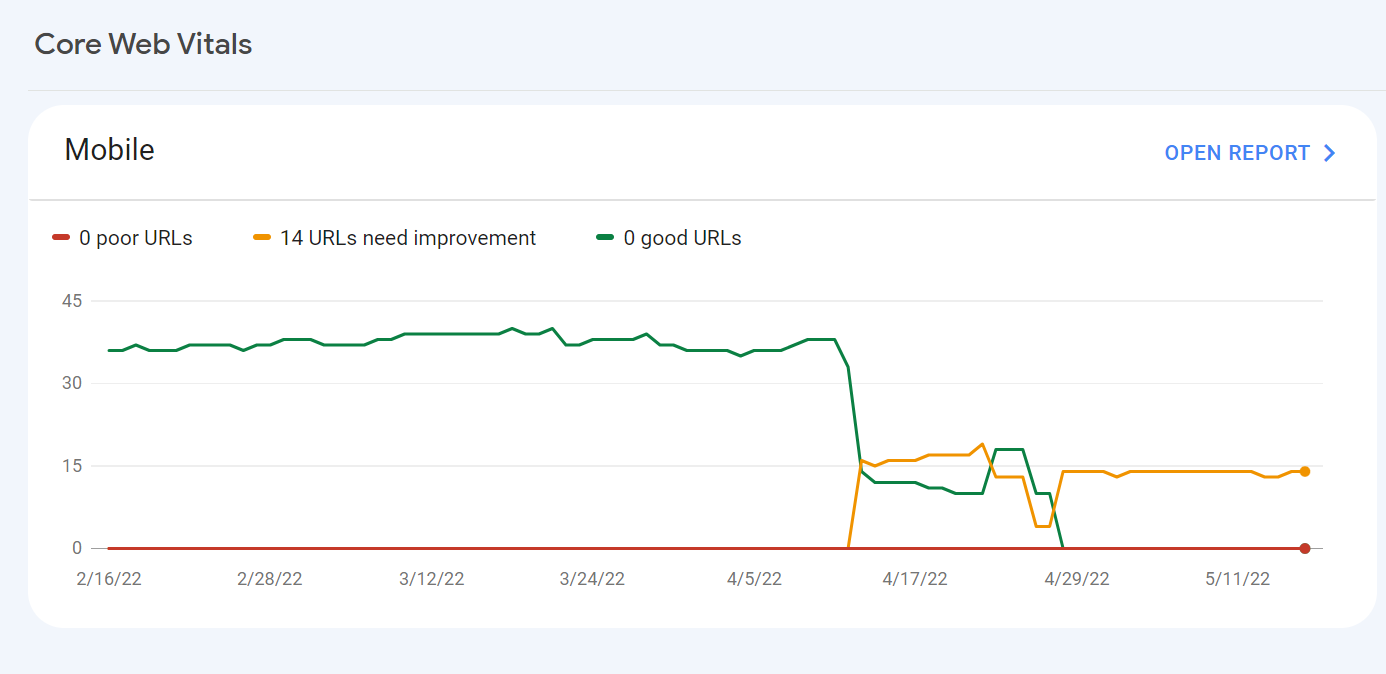
For some reason, after all URLs being previously classified as Good, our Mobile Web Vitals report suddenly shifted to the above, and it doesn't correspond with any site changes on our end.
Has anyone else experience something similar or have any idea what might have caused such a shift?
Curiously I'm not seeing a drop in session duration, conversion rate etc. for mobile traffic despite the seemingly sudden change.
-
I can’t understand their algorithm for core web vitals. I have made some technical updates to our website for speed optimization, but the thing that happened in the search console is very confusing for my site.
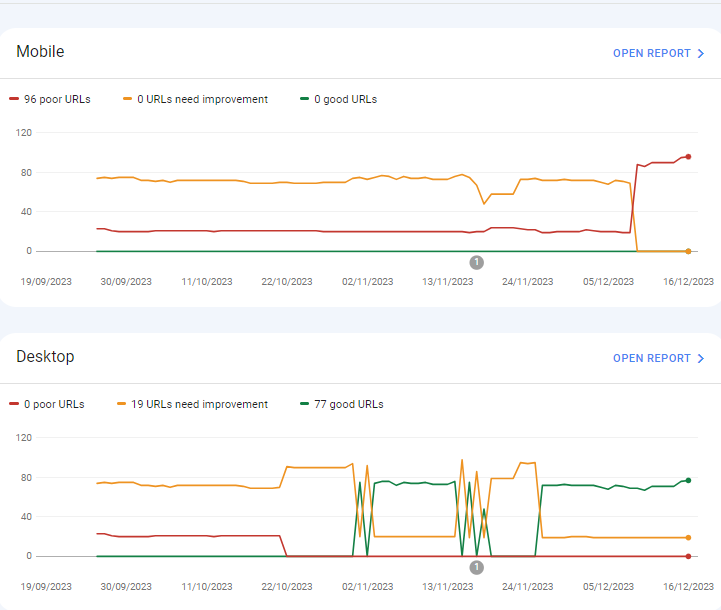
For desktops, pages are indexed as good URLs
while mobile-indexed URLs are displayed as poor URLs.
Our website is the collective material for people looking for Canada immigration (PAIC), and 70% of the portion is filled with text only. We are using webp images for optimization, still it is not passing Core Web Vitals.I am looking forward to the expert’s suggestion to overcome this problem.
-
I can’t understand their algorithm for core web vitals. I have made some technical updates to our website for speed optimization, but the thing that happened in the search console is very confusing for my site.
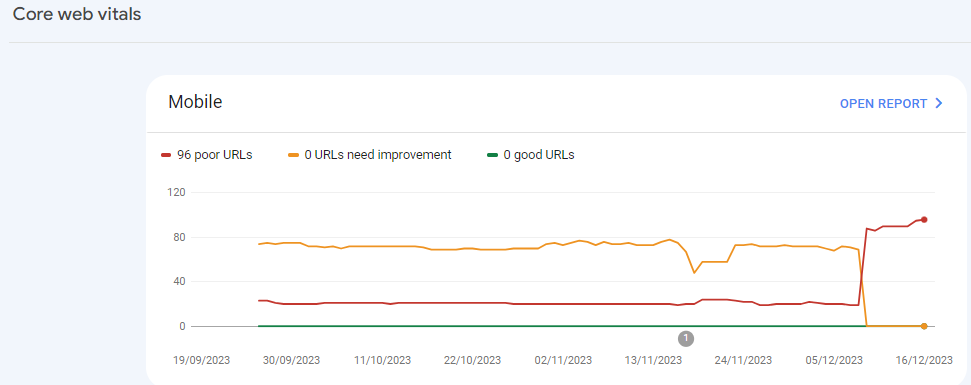
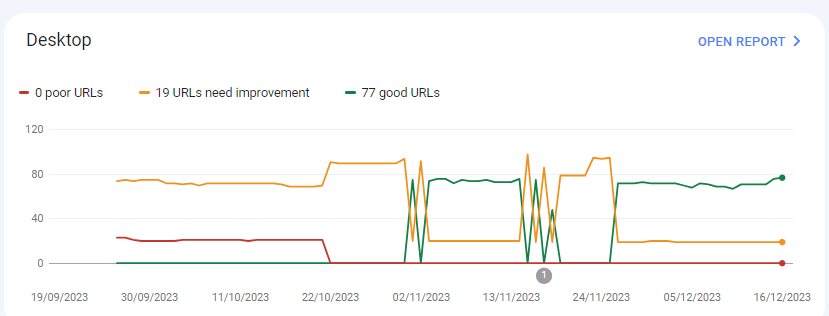
For desktops, pages are indexed as good URLs
while mobile-indexed URLs are displayed as poor URLs.
Our website is the collective material for people looking for Canadian immigration (PAIC), and 70% of the portion is filled with text only. We are using webp images for optimization, still it is not passing Core Web Vitals.I am looking forward to the expert’s suggestion to overcome this problem.
-
@rwat Hi, did you find a solution?
-
Yes, I am also experiencing the same for one of my websites, but most of them are blog posts and I am using a lot of images without proper optimization, so that could be the reason. but not sure.
It is also quite possible that Google maybe adding some more parameters to their main web critical score.



Got a burning SEO question?
Subscribe to Moz Pro to gain full access to Q&A, answer questions, and ask your own.
Browse Questions
Explore more categories
-
Moz Tools
Chat with the community about the Moz tools.
-
SEO Tactics
Discuss the SEO process with fellow marketers
-
Community
Discuss industry events, jobs, and news!
-
Digital Marketing
Chat about tactics outside of SEO
-
Research & Trends
Dive into research and trends in the search industry.
-
Support
Connect on product support and feature requests.
Related Questions
-

Unsolved Capturing Source Dynamically for UTM Parameters
Does anyone have a tutorial on how to dynamically capture the referring source to be populated in UTM parameters for Google Analytics? We want to syndicate content and be able to see all of the websites that provided referral traffic for this specific objective. We want to set a specific utm_medium and utm_campaign but have the utm_source be dynamic and capture the referring website. If we set a permanent utm_source, it would appear the same for all incoming traffic. Thanks in advance!
Technical SEO | | peteboyd0 -

URL structure for same product in multiple categories?
Hello everyone ! I am building an ecom store using wordpress. I have assigned multiple categories to the same product. What should be the URL structure when users are navigating with different product categories? Categories Assigned: tshirt, blue, striped
Technical SEO | | Dingos
Product Name: blue-striped-tshirt Option 01: Matching site navigation breadcrumb to product url URL - ecomstore.com/tshirt/blue-striped-tshirt
Breadcrumb - home/tshirt/blue-striped-tshirt URL - ecomstore.com/blue/blue-striped-tshirt (canonical to 1 product page)
Breadcrumb - home/color/blue/blue-striped-tshirt URL - ecomstore.com/striped/blue-striped-tshirt (canonical to 1 product page)
Breadcrumb - home/type/striped/blue-striped-tshirt Option 02: Same product urls and different breadcrumbs based on user site navigation URL - ecomstore.com/tshirt/blue-striped-tshirt
Breadcrumb - home/tshirt/blue-striped-tshirt URL - ecomstore.com/tshirt/blue-striped-tshirt (url same as 1 product page)
Breadcrumb - home/color/blue/blue-striped-tshirt URL - ecomstore.com/tshirt/blue-striped-tshirt (url same as 1 product page)
Breadcrumb - home/type/striped/blue-striped-tshirt I have decided to got with Option 01 so that the product in each category can be ranked according to each category keyword. Which option is the best according to your experience or is there any other best practice?0 -

Google News and Discover down by a lot
Hi,
Technical SEO | | SolenneGINX
Could you help me understand why my website's Google News and Discover Performance dropped suddenly and drastically all of a sudden in November? numbers seem to pick up a little bit again but nowhere close what we used to see before then0 -

Breadcrumbs on Mobile How important are they for SEO?
Due to Poor unsightly look of breadcrumbs and the space it takes up above the fold we only employ breadcrumbs on our desktop version. Breadcrumbs are hidden from view on mobile version. However as mobile first indexing is now in play what technical SEO impacts will this have? one thing that comes to mind is crawling deeper pages where breadcrumbs made them accessible in less than 3 link clicks? But i am unsure now of the impacts of not having breadcrumbs visible for mobile version of our site.
Technical SEO | | oceanstorm0 -

Sudden Indexation of "Index of /wp-content/uploads/"
Hi all, I have suddenly noticed a massive jump in indexed pages. After performing a "site:" search, it was revealed that the sudden jump was due to the indexation of many pages beginning with the serp title "Index of /wp-content/uploads/" for many uploaded pieces of content & plugins. This has appeared approximately one month after switching to https. I have also noticed a decline in Bing rankings. Does anyone know what is causing/how to fix this? To be clear, these pages are **not **normal /wp-content/uploads/ but rather "index of" pages, being included in Google. Thank you.
Technical SEO | | Tom3_150 -

Mobile site ranking instead of/as well as desktop site in desktop SERPS
I have just noticed that the mobile version of my site is sometimes ranking in the desktop serps either instead of as well as the desktop site. It is not something that I have noticed in the past as it doesn't happen with the keywords that I track, which are highly competitive. It is happening for results that include our brand name, e.g '[brand name][search term]'. The mobile site is served with mobile optimised content from another URL. e.g wwww.domain.com/productpage redirects to m.domain.com/productpage for mobile. Sometimes I am only seen the mobile URL in the desktop SERPS, other times I am seeing both the desktop and mobile URL for the same product. My understanding is that the mobile URL should not be ranking at all in desktop SERPS, could we be being penalised for either bad redirects or duplicate content? Any ideas as to how I could further diagnose and solve the problem if you do believe that it could be harming rankings?
Technical SEO | | pugh0 -

Google Impressions Drop Due to Expired SSL
Recently I noticed a huge drop in our clients Google Impressions via GWMT from 900 impressions to 70 overnight on October 30, 2012 and has remained this way for the entire month of November 2012. The SSL Cert had expired in mid October due to the notification message for renewal going to the SPAM folder and being missed. Is it possible for an SSL expiry to be related to this massive drop in daily impressions which in-turn has also effected traffic? I also can't see any evidence of duplicate pages (ie. https and http) being indexed but to be honest I'm not the one doing the SEO therefore haven't been tracking this. Thanks for your help! Chris
Technical SEO | | MeMediaSEO0 -

Mobile Domain Setup
Hi, If I want to serve a subset of pages on my mobile set from my desktop site or the content is significantly different, i.e. it is not one to one or pages are a summarised version of the desktop, should I use m.site.com or is it still better to use site.com? Many thanks any help appreciated.
Technical SEO | | MarkChambers0